姜栢年(字叔久,號雪峯,又號閒溪、清月軒,諡號文貞,1603-1681)
〈梅〉
庭畔寒梅報小春,
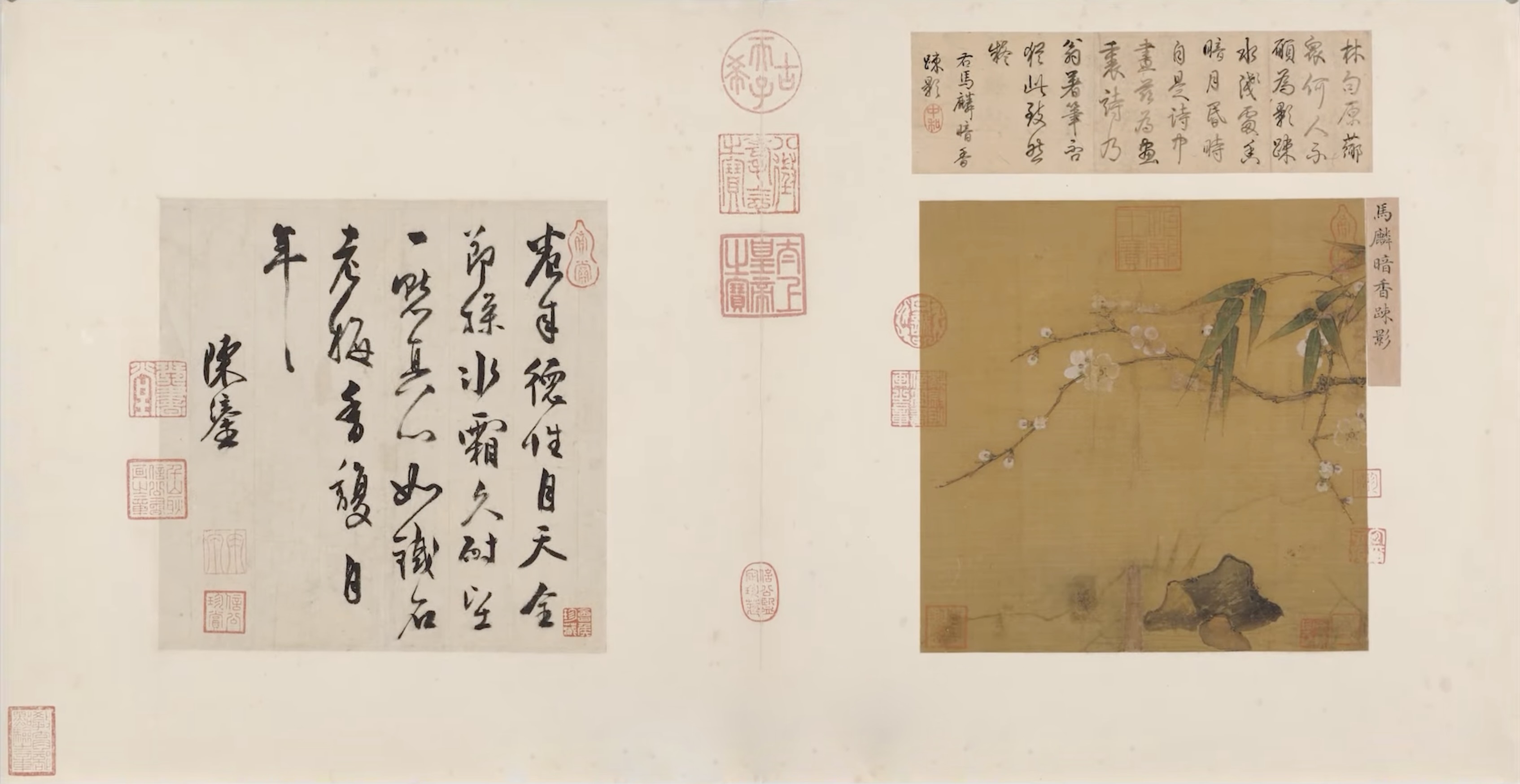
暗香疏影可幽人。
巧添㶚水橋邊興,
宛對羅敷雪裏身。
月白疏櫺看淡態,
風輕小檻嗅芳塵。
淸詩吟罷無餘事,
索笑虛簷步幾巡。
강백년 (자는 숙구, 호는 설봉, 한계, 청월헌, 시호는 문정, 1603-1681)
"매화"
뜰 언저리 차디찬 매화가
음력 시월임을 알리고
그윽한 향기와 성긴 그림자가
나를 편안하게 합니다
파수 다리 옆에 시에 담을 생각을
맵시 있게 더하고
나부산의 눈 속의 몸을
부드럽게 마주합니다
밝은 달빛 아래 단아한 모습이
창문 격자 사이로 보이고
가벼운 바람에 실린 꽃 향기가
낮은 문턱 넘어 퍼져 옵니다
맑은 시를 짓고 나니
별다른 일이 남아있지 않아
미소 짓는 모습을 찾으려 빈 처마 아래를
몇 바퀴 맴돌아 봅니다
주: 첫 행의 소춘은 음력 시월, 즉 늦은 가을이라는 뜻입니다. 아직은 그렇게 춥지 않다는 뜻이겠습니다. 둘째 행의 그윽한 향기暗香와 성긴 그림자疏影는 송나라의 시인 임포(林逋, 967-1028)가 매화를 노래하며 사용한 표현인데, 매화를 대신하는 이름으로 쓰입니다. 둘째 연은 두개의 지명이 댓구를 이룹니다. 파수는 당나라의 수도 장안을 흐르는 강으로 시흥을 일으키는 곳이라는 뜻으로 사용되기도 합니다. 당나라의 재상 정계(鄭綮, ?-899)가 시에 담을 생각을 묻는 질문에 그건 모두 "파수 다리 위 눈보라와 당나귀 등에 있는데 여기서 그걸 어찌 얻겠는가 詩思在灞橋風雪中驢子上"라고 답했다는 일화에서 파수의 다리와 시의 흥취 사이에 전유轉喻의 관계가 이루어졌습니다. 댓구를 이루는 나부羅敷는 나부산羅浮山을 가리키는 듯합니다. 중국 영남에 위치한 이 산은 매화가 많기로 유명합니다.
(반빈 역)
Kang Paeng-nyōn (1603-1681)
"Plum Blossoms"
Chill plum trees on the margin of the courtyard
Report that it is the tenth moon,
With surreptitious aroma and sparse shadows
Soothing me quietly.
Adding deftly to ideas of poetry
By the bridge over the Ba River;
Gently looking at the body
In the snow on the Luofu Mountain.
I see the unpretentious look
In bright moonlight through window grids;
I get a whiff of floral scent
In the breeze over the threshold of a little door.
There is nothing else to do
Having finished a refreshing poem,
And I search for smiles, walking a few circles
Along the edges of the roof.
Notes: So-ch'un, literally "little spring," refers to the tenth lunar month, which means late autumn, when the weather is not severe yet. "Surreptitious aroma" and "sparse shadows" in the second line are expressions used by Lin Bu (林逋, 967-1028) of the Song Dynasty to capture the beauty of plum blossoms. Two place names are used in the second couplet, which employs parallelism. Bashui, the Ba River, flowing through the city of Chang'an, means quite often as a place of poetic ideas and stimulation. That comes from a story of Zheng Qi (鄭綮, ?-899), who said that ideas for poetry are in the stormy snow and on the back of the donkey on the bridge over the Ba River, and this cannot be obtained elsewhere. This place name is matched by Luofu Mountain in Guangdong, known for plum blossoms.
(H. Rhew, tr.)
'한국 한시선(韓國漢詩選)' 카테고리의 다른 글
| 강백년,"마음에 품은 생각을 노래합니다 詠懷" (0) | 2026.06.13 |
|---|---|
| 강백년,"눈雪을 노래합니다 咏雪" (1) | 2026.06.11 |
| 강백년,"서쪽 정벌군을 위해 슬퍼합니다 哀西征軍" 두 수의 둘째 (0) | 2026.06.07 |
| 강백년,"서쪽 정벌군을 위해 슬퍼합니다 哀西征軍" 두 수의 첫째 (0) | 2026.06.05 |
| 강백년,"화재 失火" (0) | 2026.06.03 |