申晸(字寅伯,號汾厓,1628-1687)
〈江曉〉
曉發孤舟江霧生,
渚邊殘月逆人行。
西風一夜淸霜下,
蘆葦蕭蕭來雁聲。
신정 (자는 인백, 호는 분애, 1628-1687)
"강가의 새벽"
새벽에 배 한 척을 띄우려 하는데
강 위로 안개가 피어 오르고
작은 섬 옆에 남은 달은
나와 엇갈려 갑니다
밤새 하늬바람이 불고
맑은 서리가 내리더니
갈대 사이로 사르락사르락
기러기 소리가 들립니다
(반빈 역)
Shin Chōng (1628-1687)
"Dawn at the River"
As I set a boat at dawn,
Mist rises over the river,
And the lingering moon
Goes in the opposite direction of mine.
Westerly wind blew all through the night,
And clear frost fell,
And from the reedy field
Comes the rustling sound of geese.
(H. Rhew, tr.)
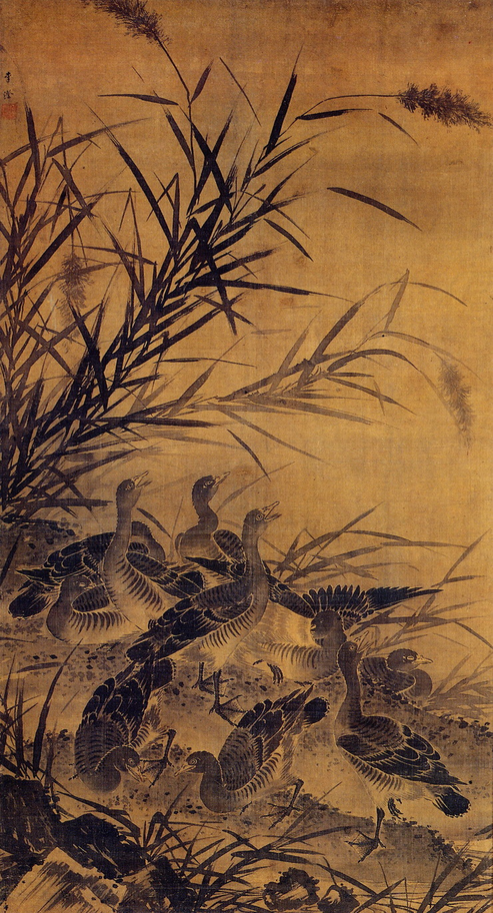
中國繪畫早已有蘆雁圖,但蘆雁圖在韓國有另一層文化意義,是老年平安無事之祝福與祈願。蘆雁、老安二詞韓文讀音同也。
갈대와 기러기를 그리는 그림은 일찍부터 중국회화전통의 한 부분이었습니다. 그러나 "갈대와 기러기 그림," 즉 노안도蘆雁圖는 또 하나의 문화적 의미를 갖게 되었습니다. "갈대와 기러기 (노안蘆雁)"가 "노년의 평안 (노안老安)"과 한국어 발음이 같기 때문입니다.
"Reeds and geese" have been a part of Chinese art tradition from early on, but in Korea this combination gained an additional cultural significance. It is a celebration and wish for the peace in old age. This is because "reed and goose" and "peace in old age" are homophones in Korean.
'한국 한시선(韓國漢詩選)' 카테고리의 다른 글
| 신정,"꿈 속에서 짓습니다 夢作" (0) | 2026.01.24 |
|---|---|
| 신정,"산사에서 마음 속 생각을 노래합니다 山寺詠懷" (1) | 2026.01.22 |
| 신정,"병중에 매화를 노래합니다 病中咏梅" (0) | 2026.01.20 |
| 홍주세,"동짓날 홀로 앉아 있다 우연히 읊습니다 至日,獨坐偶吟" (0) | 2026.01.17 |
| 홍주세,"대나무를 노래함 詠竹" (0) | 2026.01.15 |