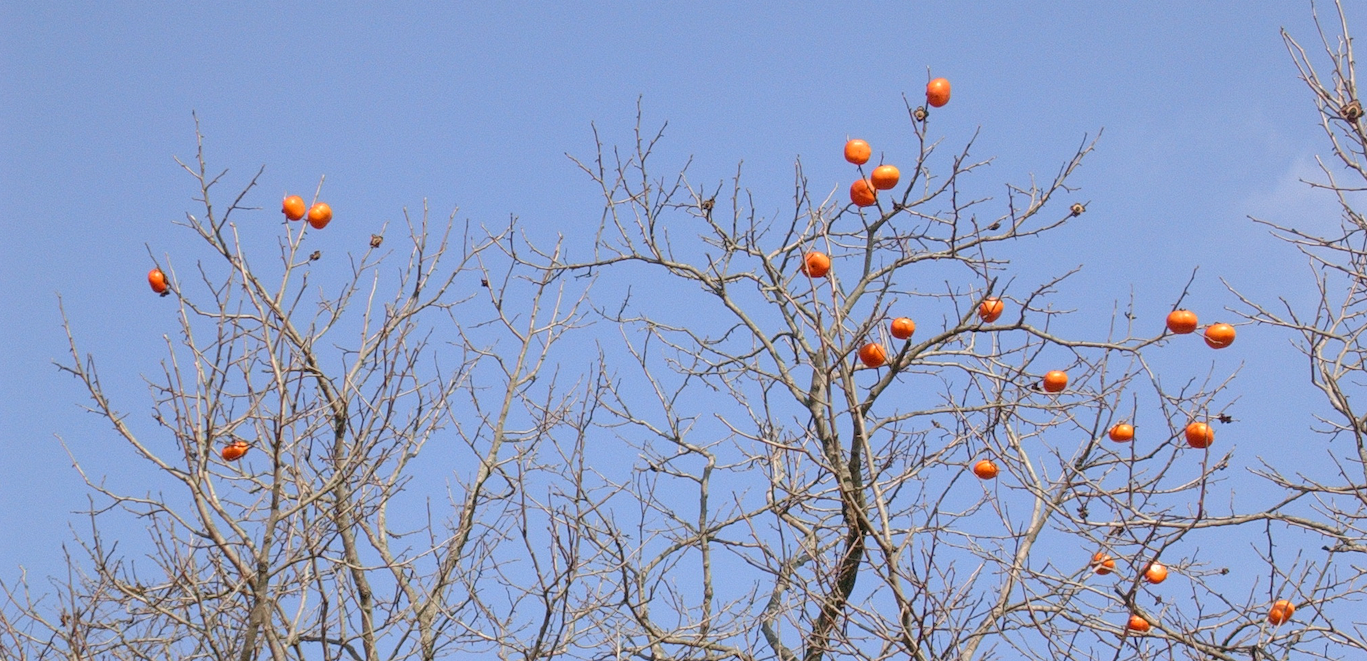
姜栢年(字叔久,號雪峯,又號閒溪、清月軒,諡號文貞,1603-1681)
〈詠柿〉
金烏餘啄遠來傳,
箇箇殷紅隕自天。
鯨飮已空千頃海,
驪遺誰採九重淵。
玉霜經齒淸泉潤,
秋色盈盤太極圓。
白首馬卿消渴久,
沈痾從此十分痊。
注:四句驪,驪龍也,黑龍也。語出《莊子·列禦寇》:「夫千金之珠,必在九重之淵,而驪龍頷下,子能得其珠者,必遭其睡也。使驪龍而寤,子尚奚微之有哉?」七句用司馬相如事。據司馬遷《史記》,司馬相如患消渴。
강백년 (자는 숙구, 호는 설봉, 한계, 청월헌, 시호는 문정, 1603-1681)
"감의 노래"
금빛 가마귀가 남은 것을 쪼아먹는다고
먼 옛날부터 전해 옵니다
깊은 붉은 색 하나하나
하늘에서 떨어졌다고 하지요
고래가 천 경 넓은 바다를
이미 모두 마셨다 해도;
검은 용 아홉 겹 깊은 못에 남긴 구슬
누가 가서 찾나요
아름다운 서리가 치아를 지나면
맑은 샘물처럼 촉촉하고;
가을 풍경 속에 달이 가득차면
끝 너머 끝까지 둥글둥글합니다
머리 희어진 사마상여처럼
소갈병을 오래 앓았는데
그 고질병이 이제부터
말끔히 낫겠습니다
주: 네째 행의 여驪는 여용驪龍, 즉 검은 용입니다. 출전은 《장자·열어구》, 천금 소중한 구슬은 반드시 아홉 겹 못 속 검은 용 턱 아래 있으니, 그걸 얻으려면 반드시 그 용이 자는 동안이어야 하고 혹시 그 검은 용을 깨우면 아무 것도 얻을 수 없다고 기록되어 있습니다. 일곱 째 행은 사마상여 (기원전 179-기원전 117)의 이야기를 이용합니다. 사마천 《사기》는 사마상여가 소갈(당뇨병)을 앓았다고 기록합니다.
(반빈 역)
Kang Paeng-nyōn (1603-1681)
"A Song of Persimmons"
We have been told from long ago,
Golden crows would come to peck on the rest,
And each and every one in deep red
Came down from heaven.
Even if a whale has already swallowed
All the water in the thousand-acre ocean;
Who could retrieve the gem left by the black dragon
In the depths of the nine-layered pool?
When the frosted beauty passes through the teeth,
The clear spring water turns succulent.
With the moon being filled in the autumn scenes,
Everything is fulfilling to the end beyond the ends.
My hair turned white, and like Sima Xiangru,
I have been suffering from diabetes,
But the chronic disease might be healing
Completely from now on.
Note: Line #4 alludes to the following story in the Lieyukou Chapter of the Zhuangzi: "The precious gem is under the chin of a black dragon in the depth of nine-layered pool. It can be retrieved only while the dragon sleeps. If you wake up the black dragon, you would not obtain anything." Line #7 uses the story of Sima Xiangru (179-117 BCE), who, according to the Shiji suffered from diabetes.
(H. Rhew, tr.)

'한국 한시선(韓國漢詩選)' 카테고리의 다른 글
| 강백년,"이백과 두보를 읽으며 讀李杜" (0) | 2025.12.17 |
|---|---|
| 강백년,"병든 눈 病眼" (1) | 2025.12.15 |
| 강백년,"산속의 집 山家" (0) | 2025.12.11 |
| 강백년,"산길 가며 山行" (0) | 2025.12.09 |
| 김득신,"백마강에서 옛일을 생각합니다 白馬江懷古" 두 수 (0) | 2025.12.06 |